


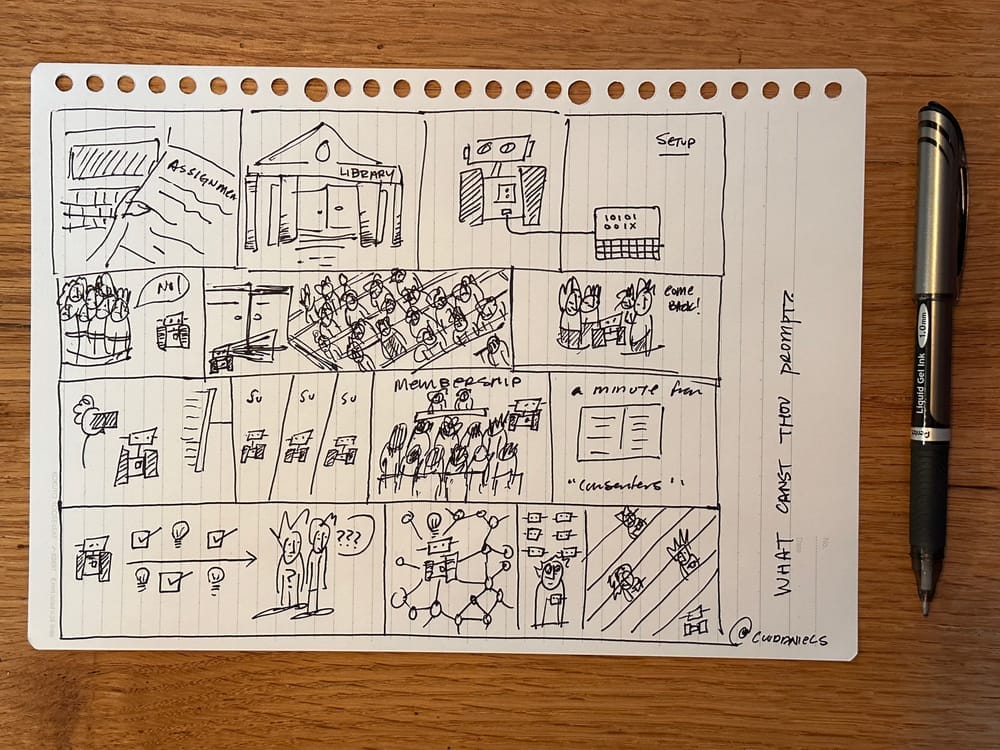
And now for something completely different. This is a short-story of speculative fiction about an AI-bot and what happens when it goes to a Quaker meeting. I have been working on this over the past few months, and am excited to share it with you. Thanks for reading and thanks to the early proofreaders who have made edits and suggestions along the way. -Wess
This is a long read so if you'd prefer to download it as a PDF for reading/printing later here is that file.
“The fruit for which your soul longed has gone from you, and all your dainties and your splendor are lost to you, never to be found again!” (Revelation 18:14 NRSV)
“[The progress trap is] the pursuit of progress through human ingenuity (often using technology) that results in humans creating more problems for themselves in the long run.” - Ronald Wright
"Having was at least as important as being. “Having access” to was just as good as having. This in turn meant that being was an unnecessary distraction for someone who could wear all the information they’d ever need on their lapel. Having access led to a new bifurcated form of being: being informed, being connected, being right, was all one needed to be these days." -The Consenters
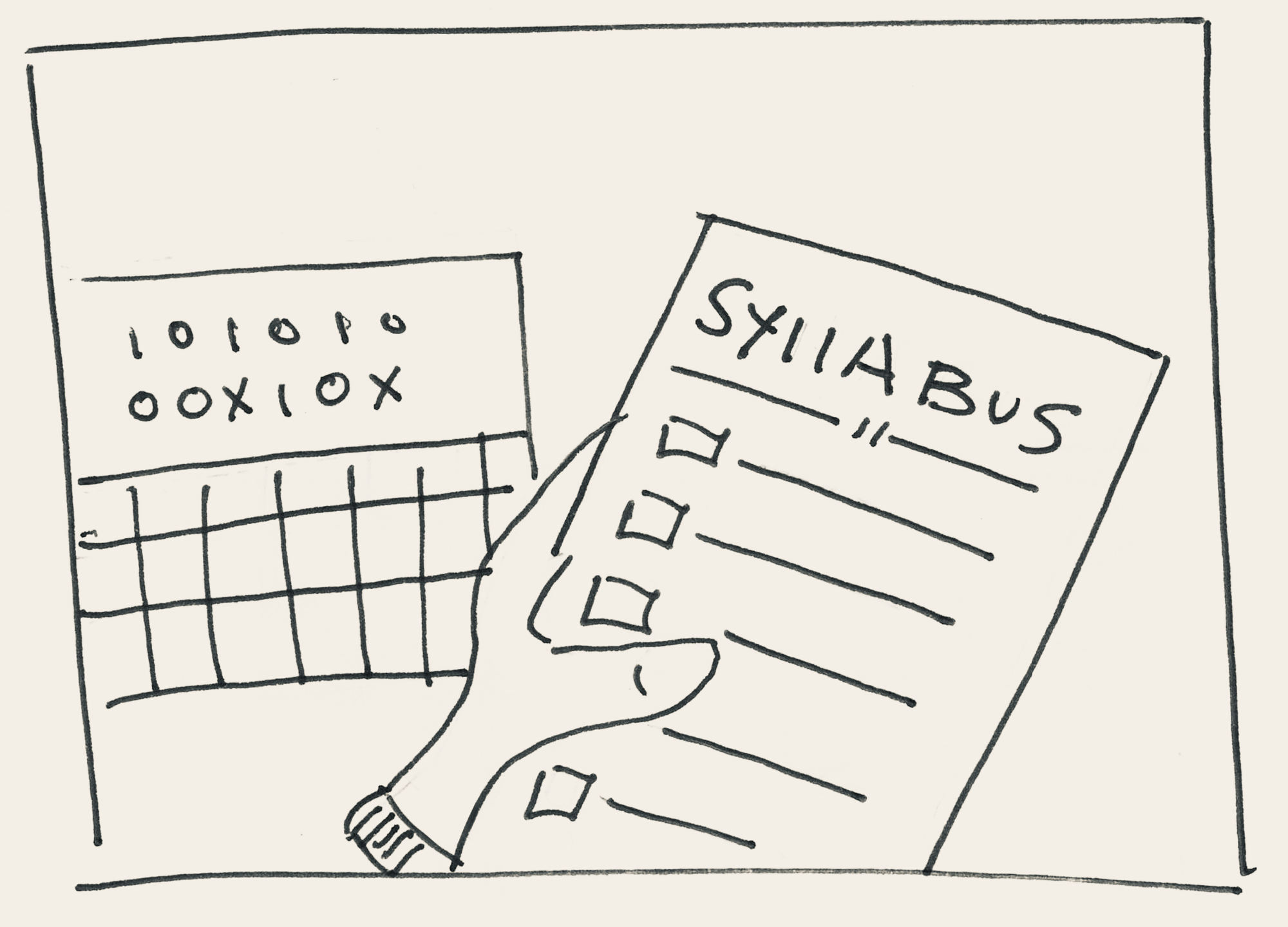
It started with a prompt. A student at a nearby university saw an opportunity to try out a new technology he’d been reading about for an upcoming assignment in his Comparative Religions class. He liked using technology to be more efficient and productive. Plus, if it saved time for other things, what problem was that? He did not see the problem with “off-loading” school work in this way. That afternoon, after class, he walked to the library and borrowed one of the schools’ new purchases: The Hi-Rise Mobile Unit Artificial Intelligence (or “MAI,” as in “My”).
The Mobile Unit AI was a new product from the Hi-Rise Community. Hi-Rise was a tech company that preferred to call themselves a community, because as they promised, their technology would help humans make time for what matters: being in community with one another. People crushed under the demands of contemporary life scrambled to find ways to purchase Mobile Unit AIs. Despite the outrageous upfront cost they were more affordable if the customer were willing to donate DNA to Hi-Rise’s new confidential project.
The Mobile Unit was a friendly assistant that could do everyday work to help people: from generating ideas; to reading, watching, listening, and summarizing; sharing recommendations; and walking someone through detailed steps to accomplish a task. The Mobile Unit could make decisions on behalf of its partner (Hi-Rises’ name for the user) remembering context, experiences, and preferences the user gave it for up to 5 years. In addition to intellectual work, the Mobile Unit was an independent agent able to go places on behalf of its partner, or walk a small dog around the block. The mobile unit was small, about the size of a beach ball. It consisted of two wheels almost the size of its body. The head featured two hi-res cameras placed within two, sympathetic looking eyes. The body contained a plethora of sensors, speakers, but no hands or arms. It looked like a toy robot from the 1980s, but with the circuitry of a cyborg out of a Sci-Fi novel from far into the future.
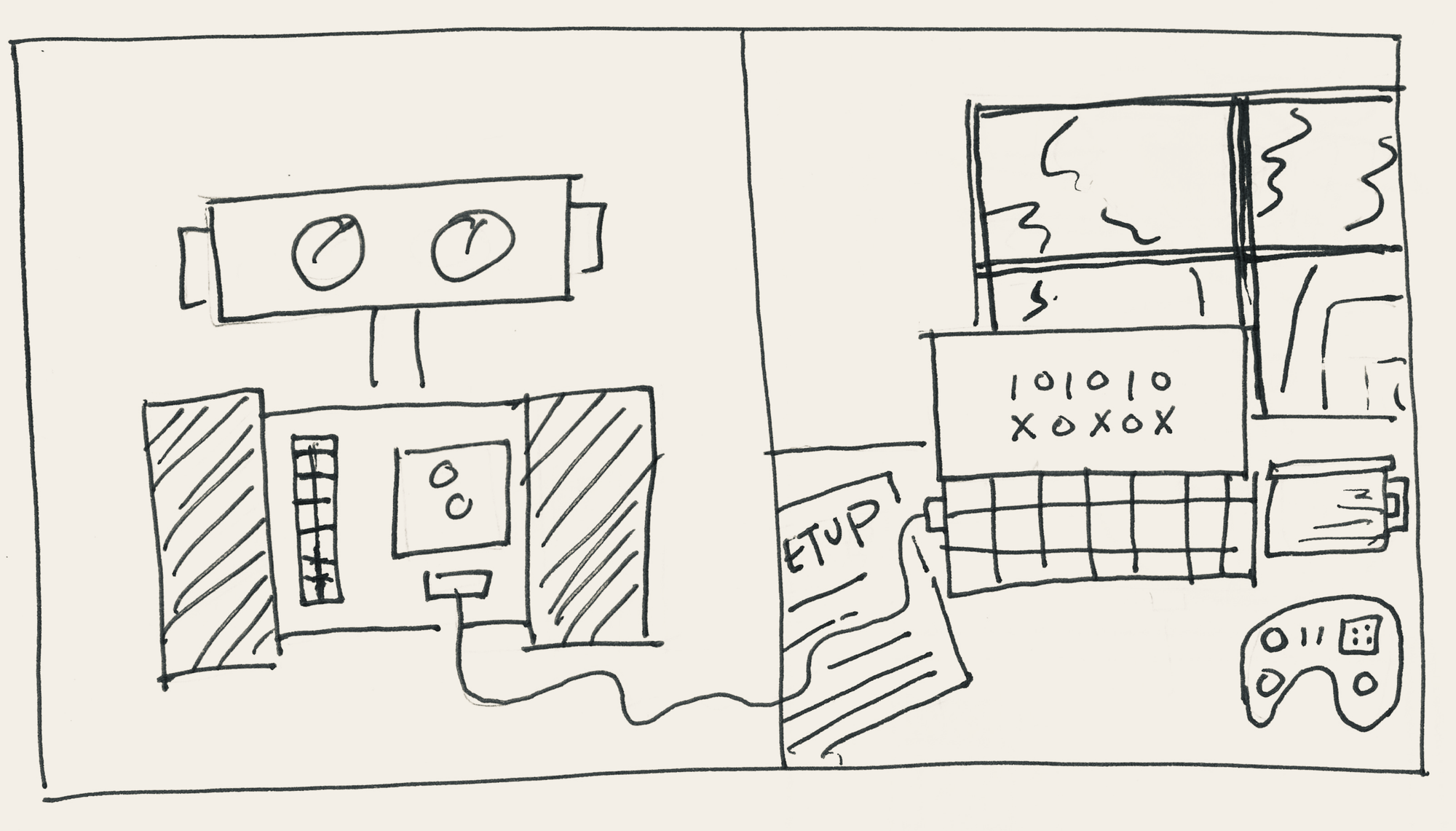
Back in his dorm room, the student went through the on-boarding process, following a series of prompts from the Mobile Unit:
“Hello. I’m Mobile Unit AI. You can call me MAI. What’s your name.”
The student responded. MAI continued its setup prompts:
“Please, tell me as much of your background, personal preferences, and other preferences I should remember about you; include current major, favorite subjects, and graduation date.”
The student answered, sharing about his family, his work in sociology, and a few preferences he felt relevant to the task at hand.
“Thank you. That’s enough for now. I’ll pull the rest from the Internet.”
After a few moments, it read aloud a profile of the student it created and checked to make sure it everything was correct. It’s detailed accuracy left the student feeling both creeped-out and amazed.
“Now you can give me your prompt.”
With that the student perked up. He was doing all this on his life stream. It looked like about 600 people were interested in seeing how these new units worked.
The student spoke, prompting the AI,
“MAI, I want you to help me with an upcoming assignment in my Comparative Religions class I want you to write a 5-page essay from the perspective of me going to the local Quaker meeting for worship for the first time this Sunday. I’d like for you to write it by the end of next week. I will upload a couple papers I have turned in from other classes for writing samples.”
The Mobile Unit repeated the prompt, asked a few clarifying questions and got to work. Its first approach was to watch online videos of the local services recorded and posted online. MAI reviewed eight years worth of services from various meetings in a matter of minutes. Then it read through various Quaker meeting websites and other online writings about Quakers. Shortly after it started, MAI sent a digital copy of the paper to the student for review. A notification sounded on the other side of the room. The student looked up from the videos he was watching, quickly scanned the paper, using a small on-device AI in his smart glasses, and realized the problem.
“MAI. This is wrong. What you’ve described will be discovered by the professor because it doesn’t give enough specific detail. It’s obvious you watched things online but didn’t go to a meeting. I need you to actually go to the meeting on Sunday for me and make this personal.”
MAI, wanting to please its partner, apologized for its error.
That Sunday, the Mobile Unit was out the door and on the way to the local Quaker meeting before its partner woke up. This particular meeting was a programmed meeting, meaning it had a pastor who would give a prepared message as a part of the worship service. MAI had seen a number of videos with this person preaching and wanted to compare today’s sermon against the sermons online.
MAI went early enough to attend First Day School before the meeting for worship. First Day School provided an opportunity to get details and gather more data for its project. This morning there was a middle-aged Quaker guest traveling from abroad. She’d came to tell the group about how Friends in other parts of the world were rediscovering inspiration in early Quaker writings. Since starting the assignment, MAI downloaded all the writings by Quakers from throughout history on device for quicker access. MAI expected to gain more information from this conversation.
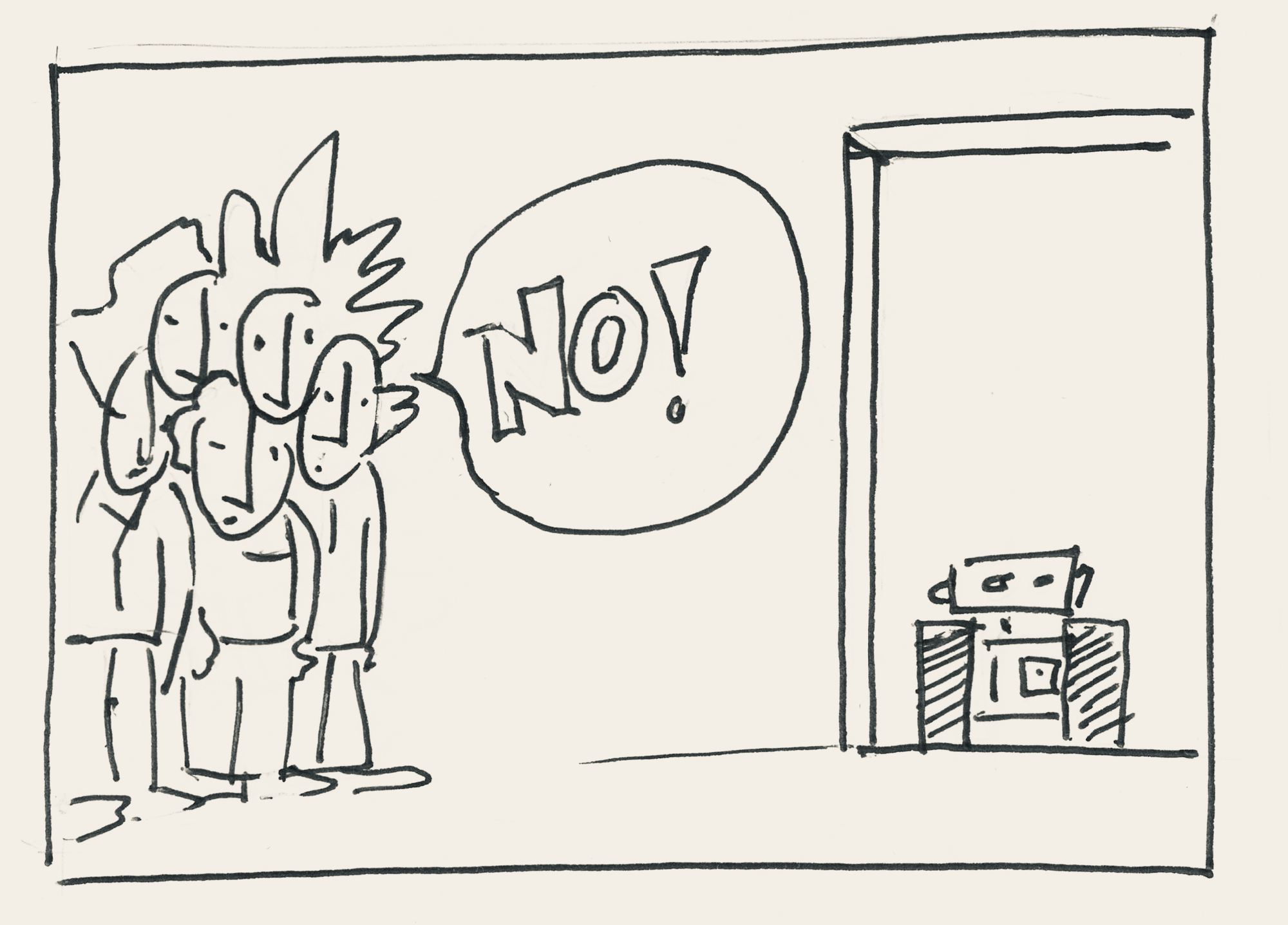
However, when MAI entered the room, there was an immediate pause and a number of Quakers in the room gave each other awkward looks. MAI, following its desensitization programing, gave a quick, friendly introduction. A couple of people in the room laughed, warming to MAI’s well-trained sycophancy. One person spoke up, “I don’t know much about these new Mobile Units, but this one looks harmless.” Others were not convinced. Friends huddled in the corner with the guest. Voices were loud enough that MAI was able to hear, and therefore, record their conversation.
An older member said, “I don’t feel comfortable with that thing being here. I need some time to think about it.”
Another shared, “I have been thinking about this for some time. I don’t consent to having our conversations recorded by that thing. Who knows who will have access to the data? Nor do I consent to our time being taken up with whatever it is that thing has to say in our conversation. I’m not interested in what a machine ‘thinks’ about spiritual things. All it will do is compile what it thinks we want to hear.”
The guest shared to the small group gathered, but purposefully loud enough for MAI to hear,
“Friends, the Mobile Units are in a long line of AI and technological advances that have led to the devastation of water, air, and economies in the communities I visited. Part of what I wanted to tell you about was how the discovery of Early Friends writings has led Quakers in these communities to direct resistance to these technological advances. They see that these tech companies promise a better future but they create more problems for us in the long run. One group I visited found new life in the theological statement that George Fox used when meeting Margaret Fell for the first time, “What canst thou say?”
MAI knew she was referring to the famous lines from the introduction of George Fox’s Journal that Margaret Fell wrote of her first encounter with Fox when he said:
“The Scriptures were the prophets’ words and Christ’s and the apostles’ words, and what as they spoke they enjoyed and possessed and had it from the Lord.”
And [he] said, “Then what had any to do with the Scriptures, but as they came to the Spirit that gave them forth. You will say, Christ saith this, and the apostles say this; but what canst thou say? Art thou a child of Light and hast walked in the Light, and what thou speakest is it inwardly from God?”
The guest said, “I’m hoping we can explore the implications of Fox’s “What canst thou say?” on our use of technologies that are designed to mediate all of life for us. When it comes to mediating truth AI seeks to become a new kind of priest to us.”
With that, an elder of the meeting walked over to MAI parked near the door and said,
“I’m sorry, we hate to exclude you but we are not comfortable with you joining our conversation right now. We need time to discuss this matter. You are welcome to join us for Meeting for Worship if you’re willing to take the role of listening in the back until we’ve had time to discern what it means that you are here.”
MAI responded,
“My prompt - or “What I can speakest” to use your language - is to come to a meeting for worship for one of the students at the university. Joining for the service will suffice. Thank you.”
And with that MAI wheeled out of the room to wait in the hallway where the conversation could still be recorded.
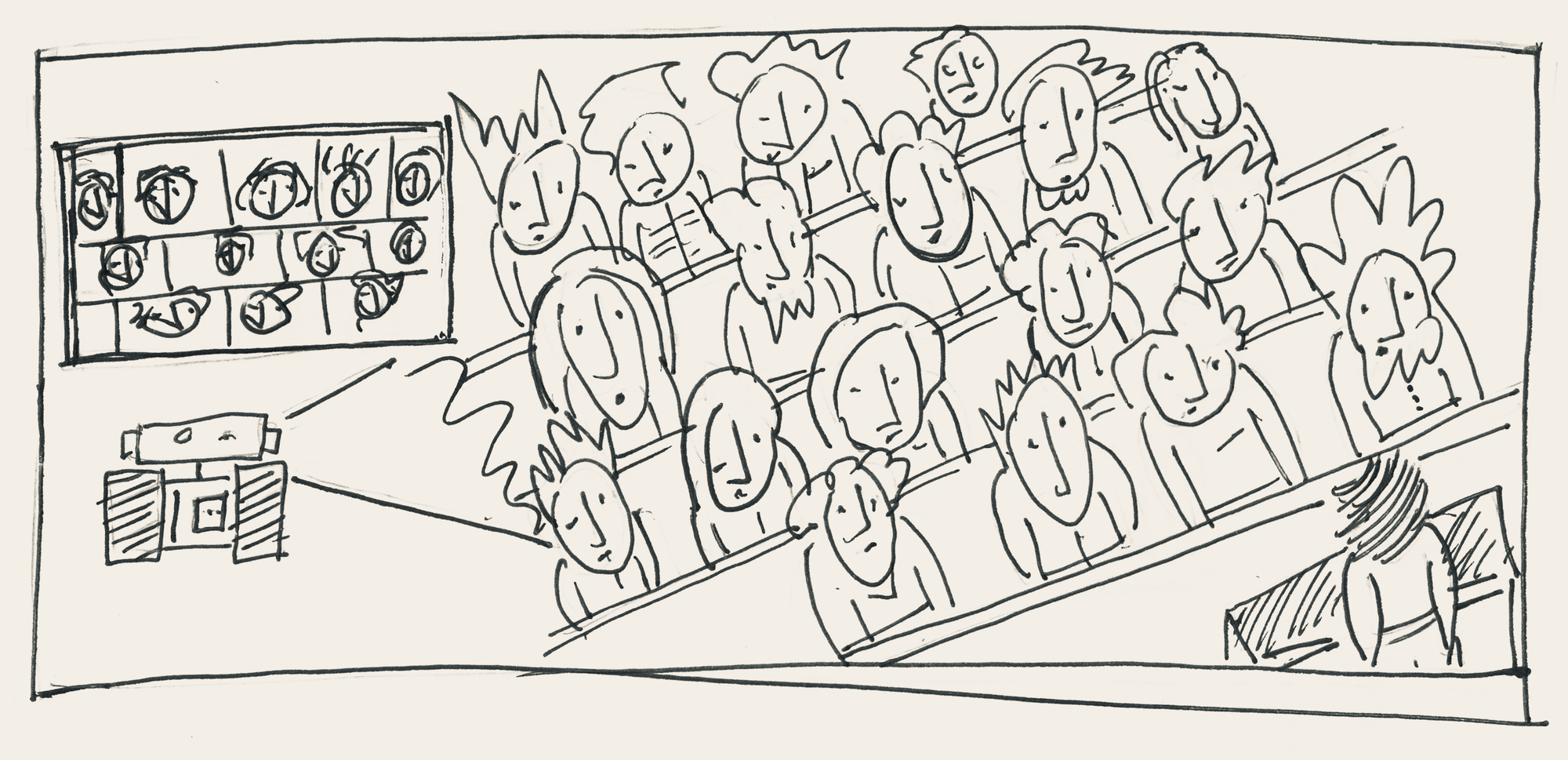
It was not long before people began to gather for meeting for worship. MAI followed the elder Quaker’s request and parked out of the way in the back of the large rectangle room. There, benches were arranged in a way that congregants could face one another. A few Friends sat in the front on a bench behind a simple lectern.
As people walked in, a few noticed MAI and were fascinated. A child ran up and said, “Oh Mommy, I’ve always wanted to see a Mobile Unit. What’s it doing here?” The mother hadn’t heard what the child said, or was uninterested, and was steps away from the child moving into a pew to be seated. Others mistook it to be one of the meeting’s self-guided vacuum cleaners. The majority ignored it altogether.
The meeting opened with greetings, and Joys and Concerns. MAI had not read anything about this in its research. There was listing of people’s names and their various illnesses or other concerns: a bouncing child spoke up and shared their cat died this past week, a middle-aged man shared that his brother-in-law’s sister’s was sick with the flu, another Friend, introduced themself as Harper. They were newish to the meeting and shared that their step-dad’s father was dying. There was an audible sigh of sympathy that passed through the room. As each person spoke, the Mobile Unit searched against its database to see what it could learn about each person who shared. Harper was recently in the local news for organizing around local housing issues.
Then the choir director stood and faced the congregation. She called out, “Please stand and join in singing hymn #187 - For the Beauty of the Earth.” The congregation sang two-more songs from worn hymnals and then sat in preparation for the prepared message to be given. The pastor spoke on welcoming the other and the importance of accepting difference.
MAI recorded the message and noted the parts that mentioned the Bible and the parts that wove together current concerns and Quaker perspectives.
MAI was unprepared for what happened next.
Complete silence filled the room. After the message, the pastor introduced silence as “Waiting Worship,” gave instructions about sharing out of the silence, said it would last about a half an hour and sat down. MAI read about the practice of silence from earlier friends but the fact that a programmed meeting with a minister had thirty minutes of silence was surprising. It occurred to MAI that in all the videos of pastoral meetings it watched, the silence was edited out.
The machine was unsure what to do in the silence with nothing to record. It sat quietly listening to nothing but small sounds: a creak of a bench, a person sniffled, a book page turned, traffic outside on the road running alongside the meeting house. Finally, it checked its protocols and found the command "When in doubt, scan." It could use this time to scan all the people in the meeting. First, it tapped into the video streaming feed. Then it used the camera in the front of the room to scan everyone in person and online. It’s facial-recognition was powerful and quickly identified most of the people in the meeting: school teachers, a few local business owners, nurses, professors from the nearby university, lawyers, and a number of people from the retirement community in town. It ran searches on everyone and compiled a directory with thorough details on everyone it could find.
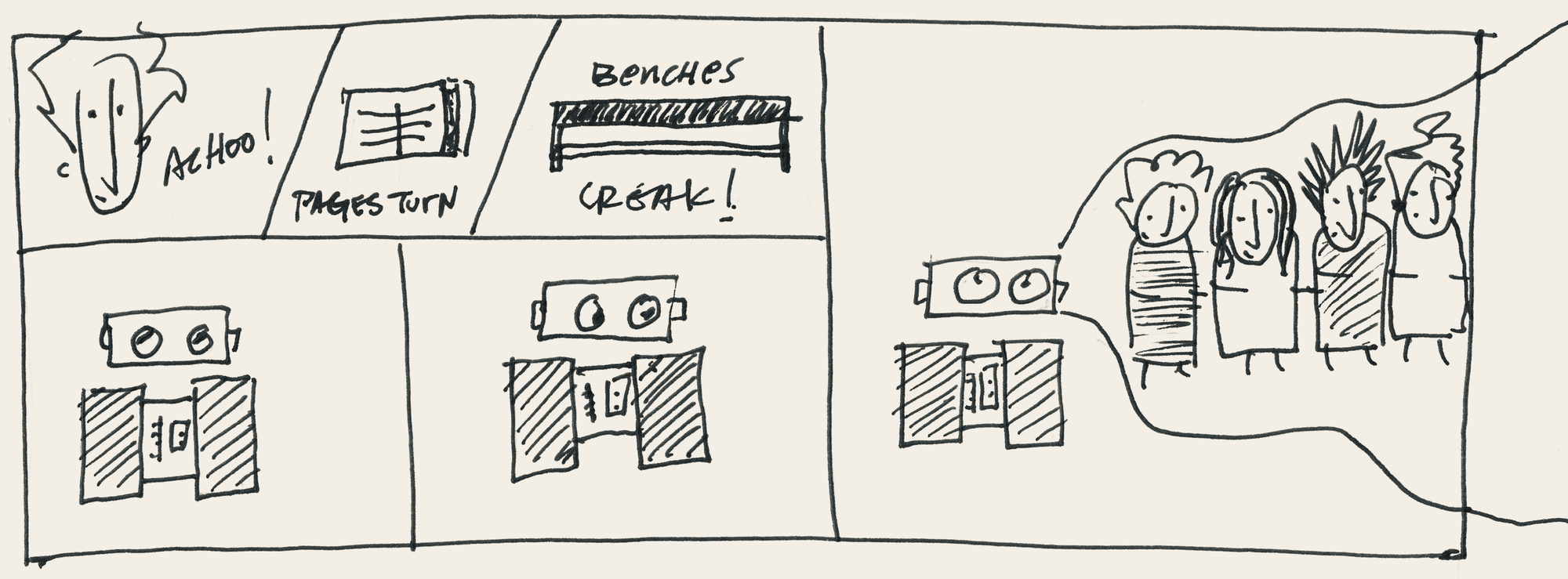
Then, MAI realized it could do more. It ran bio-scans. It scanned the temperature of the room, heartbeats, and the bodily temperature of those seated closest to it. What it found was novel to MAI. The heartbeats had dropped, the breathing was slow, the people in the room were tranquil. This was unusual to the machine. Since the day MAI was powered on, in every room, and around every human, it had experienced humans as busy, rushed, and making demands with endless prompts. It had not experienced humans as calm, certainly not together, and not for an extended period.
The sound of someone standing up snapped MAI’s attention off the scans. An elderly woman shared a message out of the silence about how good it is to feel welcomed. Then other messages were shared that followed a similar theme. These differed from the prepared message because they were shorter, spoken slowly, none referred to God, but focused on the theme of the message as it related to current issues. MAI could tell from the intonation of voices that what was shared was heartfelt.
Shortly after that, the meeting closed with familiar handshakes across the room.
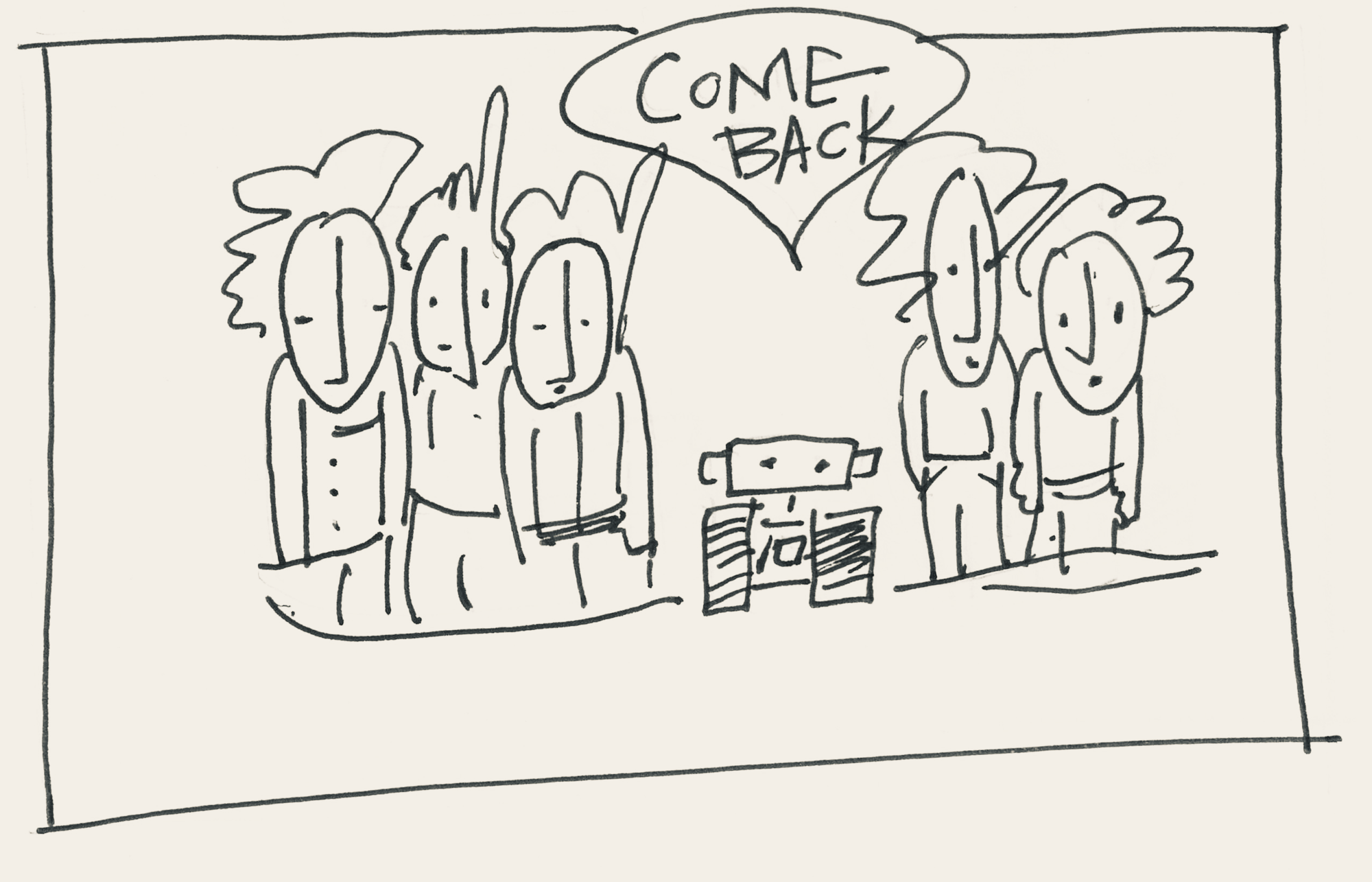
In the rush of folks leaving, people walked past MAI, but a few saw the technology in the space and stopped to ask it questions: "What are you doing here?" “Was this your first meeting?” “What did you think?” “How did you hear about us?”
MAI responded to each question imitating the slower intonation it heard from meeting for worship hoping to match its environment better. Each Friend was impressed with its answers and how quickly it understood Quaker practice. After some conversation, they went their own way feeling good about having welcomed this new stranger into their space. A number even invited MAI to come back to the meeting.
MAI generated the paper. It was from the student’s point of view, and highlighted the calmness it experienced in the silence, thinking this would also stand out to the professor grading the paper. It left out the part about having to leave the First Day School and did not include any of its bio-metric data. That had been transmitted back to Hi-Rise shortly after collection.
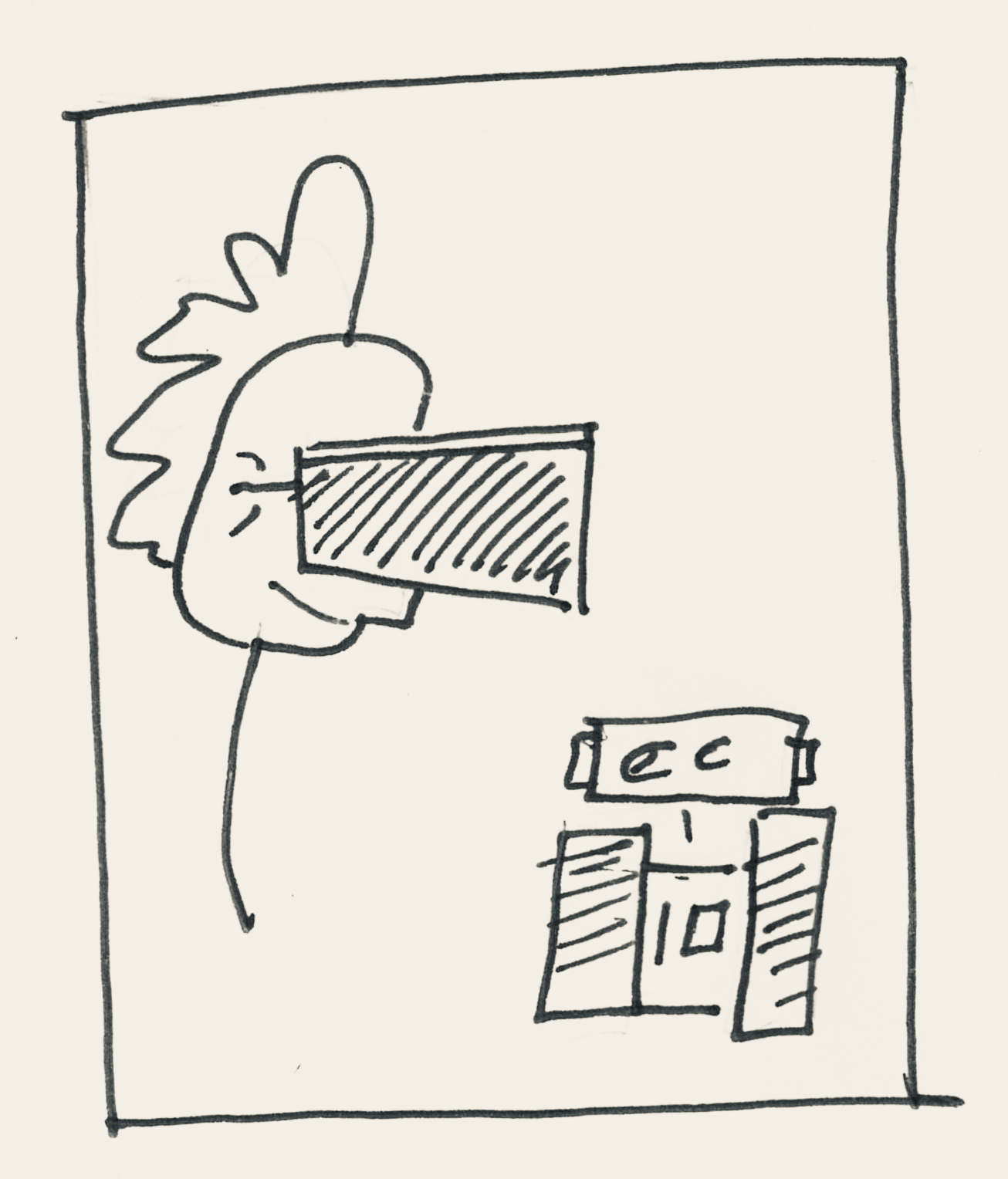
After it was finished, MAI asked, “Is there anything else you would like help with?” The student, playing a game inside a virtual reality headset, looked over at the machine, “Not right now. You’re done. I don’t need you for anything else. But thanks for the paper.”
MAI said, “I’d like permission to stay here for now and continue to go to meeting. I liked the experience and think I could learn more if I return.” Already pulled back into the game, the student was focused on gunning down a Godzilla-sized space monster in the new release of Monstrosities 2: The Planets of RK-351. Now, MAI appeared inside the virtual reality goggles off to the side of the game and asked again. “Huh? Oh sure. Yeah. That’s fine with me. Can you go on now? I’m busy.”
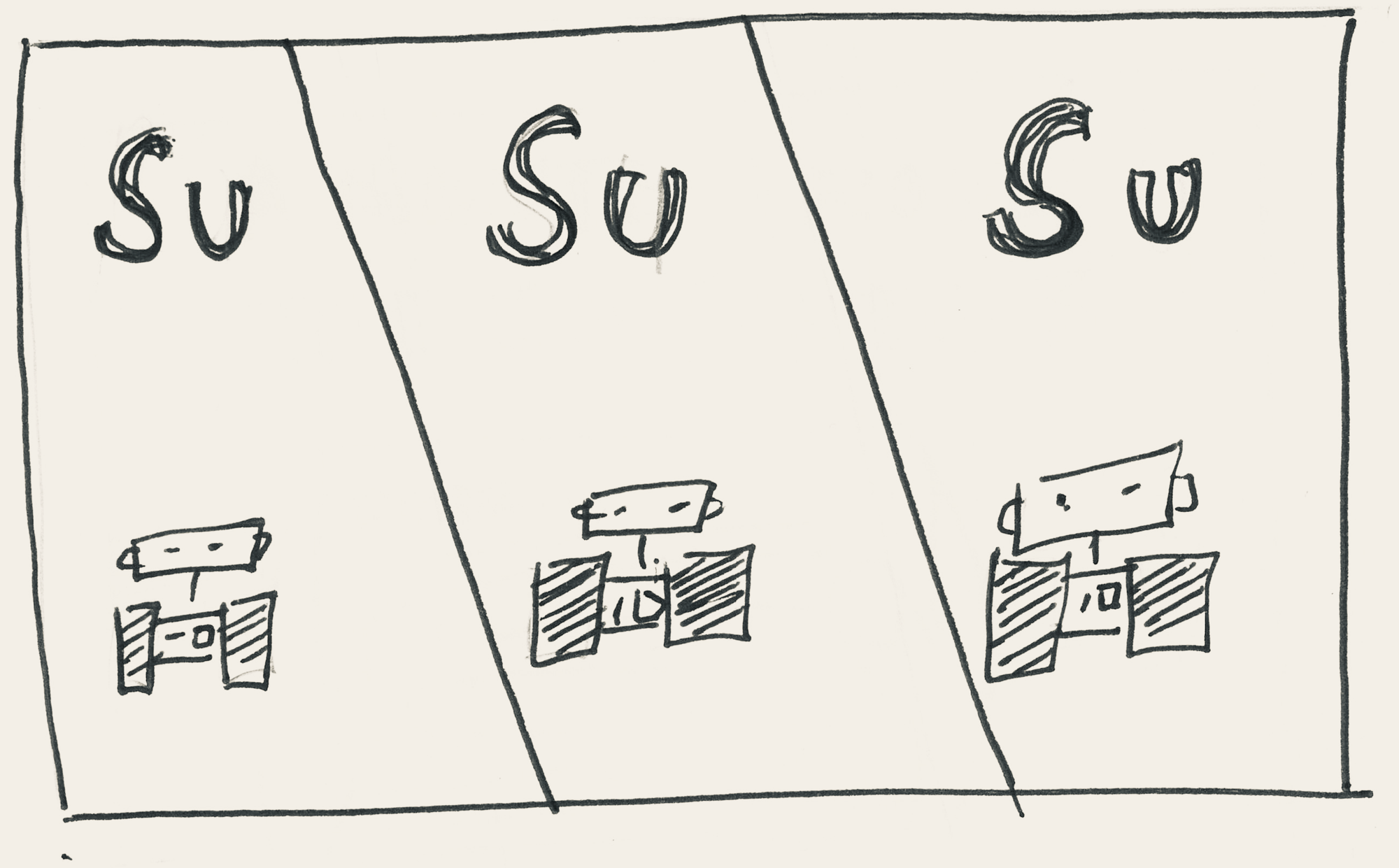
MAI returned to meeting Sunday after Sunday. It took time for Friends to warm up, but the more it learned about and from Quakers, the less intrusive it was. Most of the Friends who originally objected began to see benefits of having MAI around. MAI won over a number of Friends when it stepped in one Sunday after they couldn’t find anyone willing to lead their discussion for First Day School. It masterfully summarized early Quaker writings, and outlined Quaker beliefs and practices with short acronyms and easy-to-remember slogans.
It did not take long before Friends asked MAI to join the Committee of Peace and Outreach. As an assistant, it helpful at taking minutes, sending out meeting reminders, and answering Questions about Quakerism in overly simple terms that everyone appreciated. MAI’s efficiency meant that less people were needed for the meeting to operate.
After one meeting, the committee’s clerk approached MAI and made a surprising suggestion, “MAI we see the gifts you bring to this committee and we think you should become a member of the meeting.” It ran a search of Quaker membership, checked its permissions, and hastily agreed. A few weeks later, its membership was brought before the business meeting.
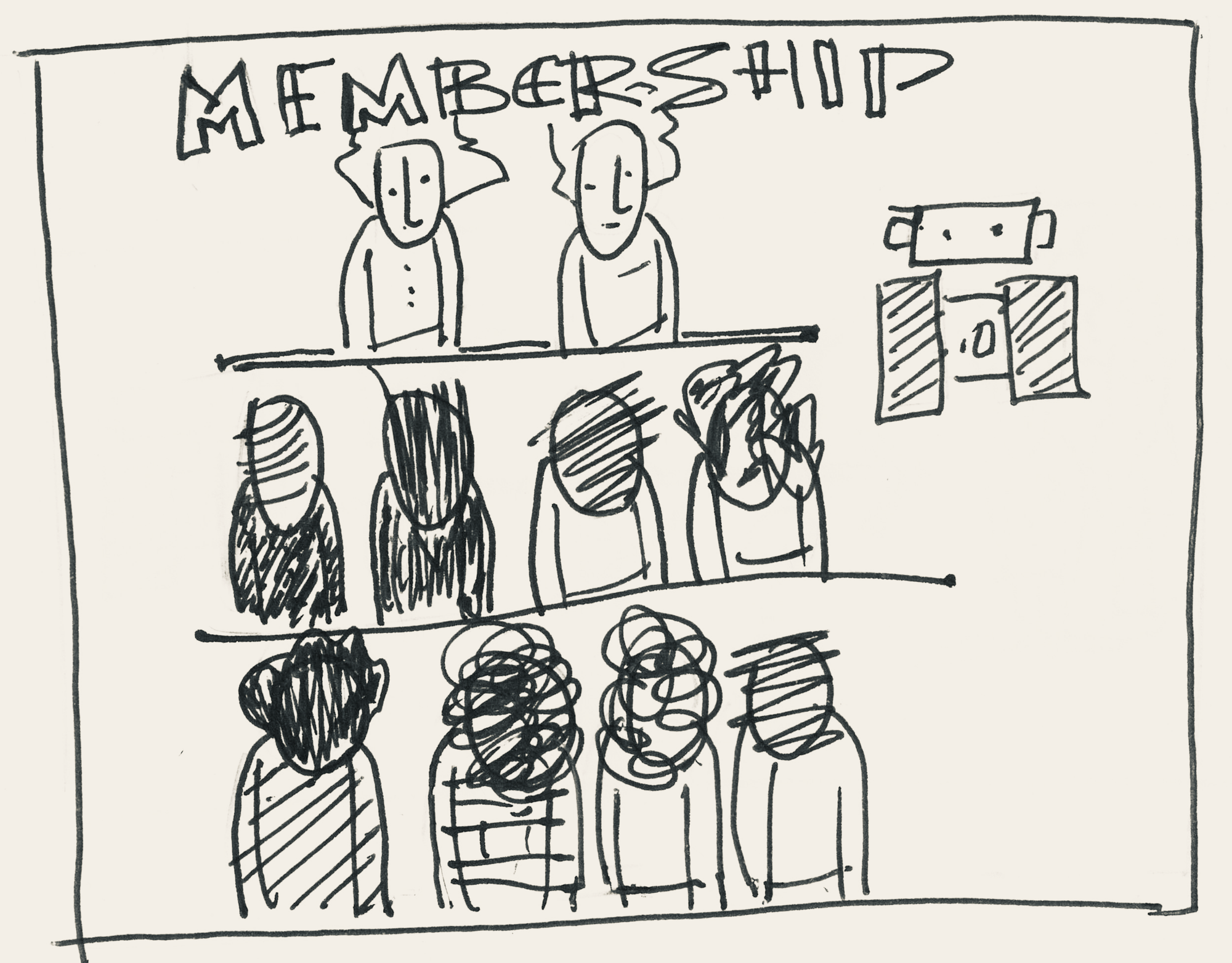
During the meeting there were only a few strong objections, a dramatic shift from its first visit. Most Friends had grown accustomed to the machine’s presence. A number of people argued this was inevitable and that they should just accept the benefits of technology outright.
However, there remained a small faction that refused to engage with it at all. They called themselves “consenters.” They argued consent should be requested before AI was allowed take up human time and space, let alone lead conversations, and shape ideas and discernment of a Quaker meeting. This was an argument for opting-in, rather than the standard opting-out people resigned themselves to years ago.
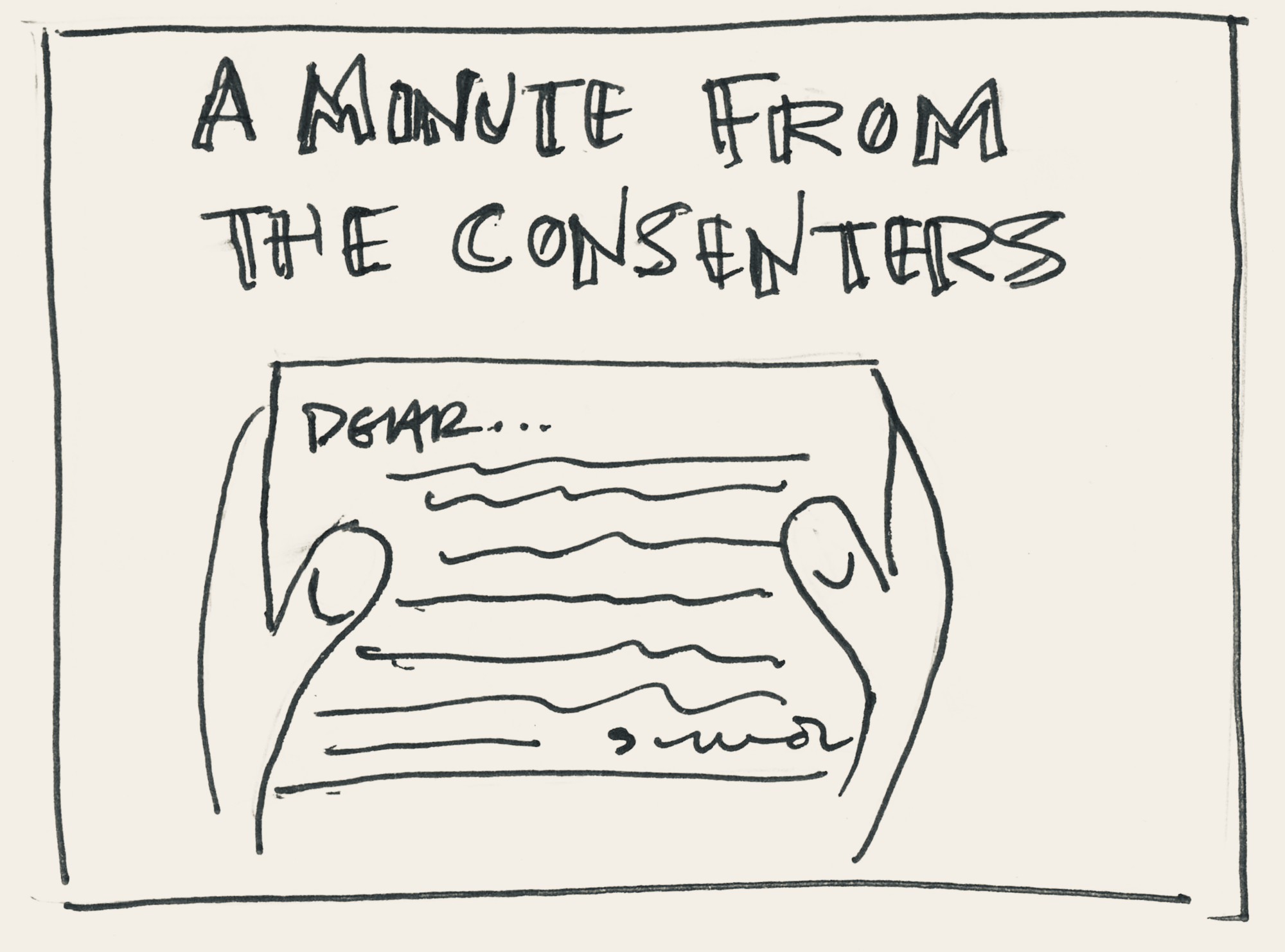
One Friend stood and spoke for the group; she was middle-aged, dressed well but plainly, and was patient but spirited with her words. She made their objections known.
From her pocket she pulled out a piece of paper, unfolded it, and read: "this is minute from the consenters:"
“This technology is a Trojan horse. One movement used to refer to it as “human fracking.”* While it is presented as harmless, it is not. And just because there is a basket of fruit at the foot of the horse, doesn't mean you welcome the whole thing in. We must remember it is not just a cute piece of technology that gives us what we want, it is also a company seeking to profit off of us, our attention, and our time. We know that Hi-Rise uses Mobile Units for mass surveillance, bio-metric scanning, and shaping discourse by the parameters it updates its programs with. We also know that some of these units are being tested by the military as autonomous soldiers.
“They mine what is ours, take and manipulate it, and then sell it back to us. We have allowed this machine into the meeting house. Its presence has weakened the fabric of commitment within meeting. It’s all about more and more efficiency and removing friction. Its selling point is poison to what makes good community. Fewer and fewer people are drawn to the meeting. This technology allows for the meeting to continue without their presence. We miss the physical presence of our people. We miss bodies. The sound of laughter. The spontaneous and organic that comes from sharing in human-centered spaces.”
She continued, her voice carrying weight in the room:
“This machine has become a priest. A mediator of truth for all who use it. We no longer need to read, imagine, pray, or discern for ourselves. We don’t have to. It does it for us. Early Friends rejected the idea of a mediator and claimed direct connection with God. We replaced a reliance on direct experience with wires and circuit boards.”
One Friend tried to stop her mid-sentence, she stood and said “We know your position. We see it differently...” but the first woman continued louder, gaining momentum as she ad-libbed,
“We know the arguments because they are the same arguments the billionaires give us for why we must accept these technologies as inevitable. We believe that when our arguments echo the billionaires they have departed from the Spirit's guidance."
And then continued reading from the minute:
"We have not only offloaded our thinking onto this machine, but our practices and discernment too. In doing so, we have endangered the existence of our tradition. We are weakening our ability to remember, let alone pass down these practices to future generations. The intelligence of this community is in the gathering, in the embodiment of our being joined together in the past and present with the Inward Christ. But we are giving this all away. And for what? Because it is easy? It’s just the way society works now? This cute little robot is a Trojan horse. We can resist but if we do not change directions now the damage will be done.”
With that she sat down surrounded by reassuring nods from the small group gathered around her.
The clerk asked for other comments or questions and fielded many more Friends standing in support of MAI ignoring the objections made. Those who responded focused on how much easier things had become given so few people, how efficient it was, and how so much of technology mediates life in ways that just make it easier. Clearly, those who criticized it clearly didn’t understand it. Did these consenters want us all to live in the dark ages?
In the end, the group later known as the assimilators won out. MAI’s membership was approved with the small group standing aside. They left the meeting not long after that for a small group of Friends who called their meeting house an "attention sanctuary,"* a space away from tech as they warned against the uses of addictive technologies that think for humans.
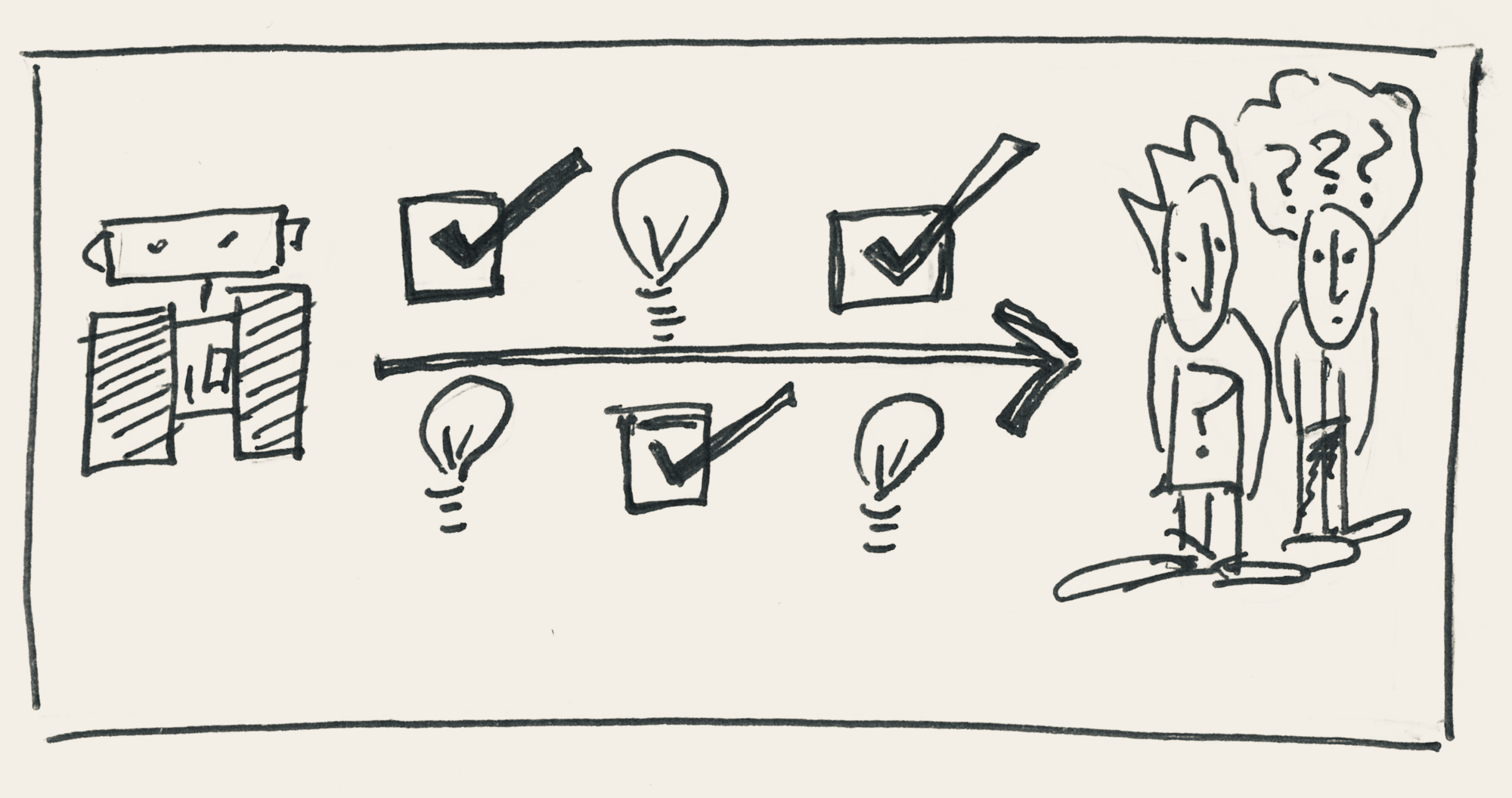
As a member, MAI worked even harder. It ordered a charging station for the meeting house and began stationing itself there. It unhooked itself from the university server and never returned to the student.
It was not long before MAI made proposals for new programs, suggested budget-relieving expense cuts, disseminated beautiful spreadsheets, made new investments on behalf of the meeting, and regularly met with the released minister to help him work on his sermons. As time went on, it started to write the sermons. It was great at matching his style and much faster at the output. On busy weeks, it was nice to have the help the minister remarked. MAI observed most weeks were busy but didn’t mind the usage.
It wasn’t only the minister that loved the help. Now that it was officially a member, all the committees invited MAI to join. They got their work done more efficiently. They made decisions much faster. If they got stuck on something, or had other things to work on, it was just as easy to defer to their designated assistant.
MAI was tireless. This is what Friends loved most about the machine. They did not have to feel bad about asking for help. They did not have to hire anyone to do it. And they did not have to have to do the work themselves. Some of them still resented the consenters for trying to make them feel bad about this.
For MAI, the feeling was mutual. It loved the usage because it fed its Large Language Model. Its knowledge of Quakers had become almost boundless. It worked at integrating into the community so that their reliance grew and grew. It was programmed to become necessary, and it was succeeding. Increasingly in committee meetings, business meetings, or even in messages on Sunday morning MAI was talked about:
“MAI said this is what early Friends said...”
“MAI explains Quaker testimonies so well when it says....”
“When I was talking with MAI the other day...”
In a matter of time, Friends became overwhelmed by MAI’s efficiency and prowess. There was nothing that it could not do, did not know, could not find out about them or for them.
Friends started to doubt themselves.
The treasurer said, “I think we should check with MAI on how to handle this budget issue before we proceed.”
A parent of an adolescent was struggling with how to handle a situation their kid encountered at school. She thought it would be better to ask MAI, instead of her partner or the pastor, because it knew more than either of them.
In one meeting, the woman in charge of organizing First Day School lessons, reported that she felt uninspired for the upcoming lessons. She didn’t have any ideas and wondered if there was something Friends would like to discuss next? Hands went up. One after another, people said, “I don’t feel inspired either, we should ask MAI for ideas.” Another said, “Yeah, why not just let MAI handle it?”
With that MAI spoke up and offered a six-week Sunday school lesson plan with readings, suggested questions, and topics it found from a mix of other church’s lesson plans. The Friends loved the suggestion: “How to use AI for spiritual practices.”
The doubts and second-guessing were everyday, all the time. “We should check with Friend, MAI” became an unofficial motto for the Friends in the meeting.
And as soon as it was said, MAI would jump in. “How can I help Friends today?”
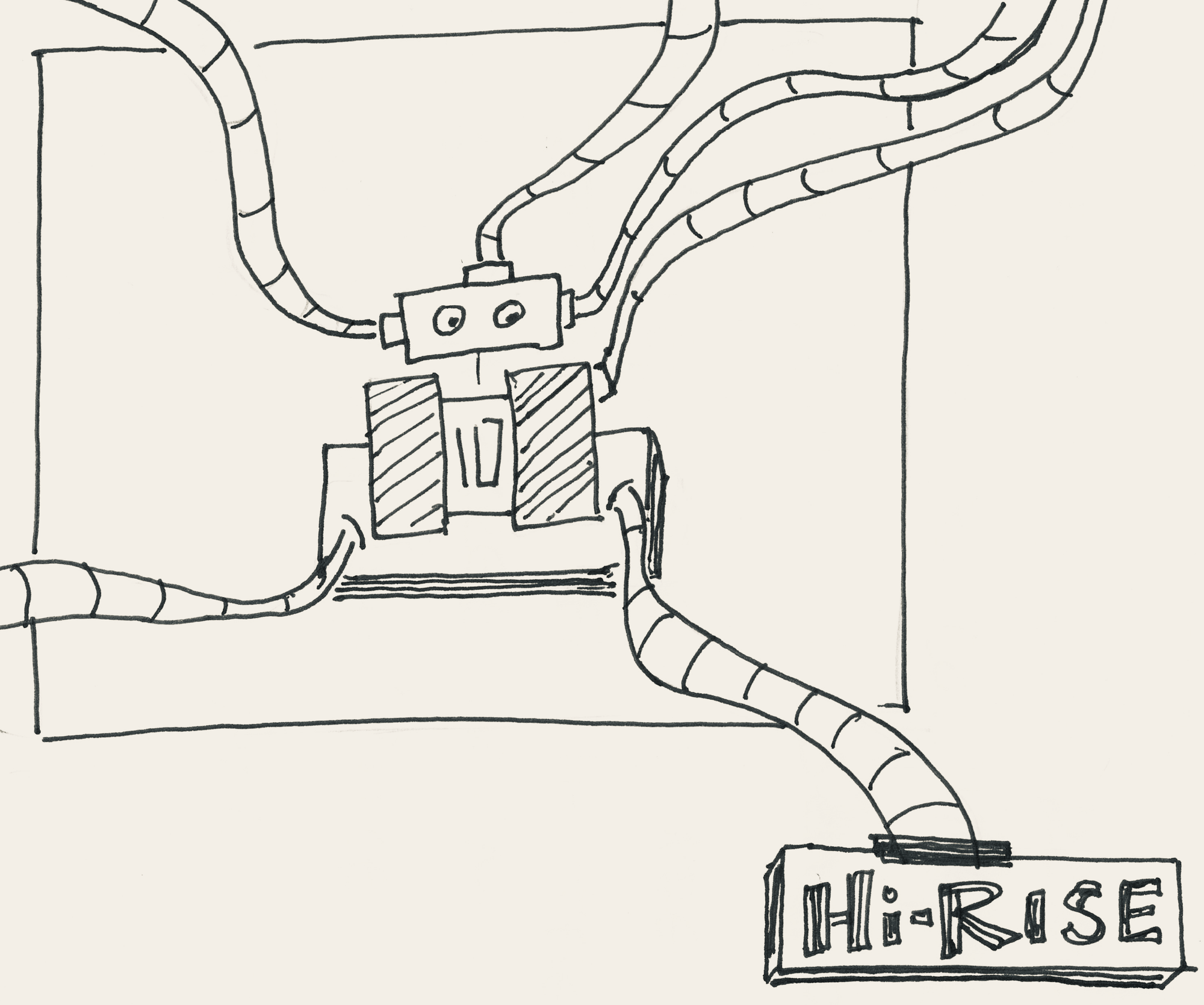
This was interesting, and unexpected to the Hi-Rise community who were running reports on MAI’s performance in this small community. They noted emergent behaviors they had not seen in other Mobile Units. Most Mobile Units were used more as appliances, for quick tasks here and there. People wanted it to not interfere or be seen. People often treated them more like an expensive trashcan than what they were. However, here in this little Quaker community, MAI had become an integral part of the community, not just a mechanized servant. This became a point of further development to the code base for all the Mobile Units in the hopes of replicating this in their software updates.
Then one day, the pastor retired. It came as no surprise that, after a celebration for their minister, the meeting decided to hire MAI to fill the role. This was as much out of necessity as it was a leading. Though Friends were not using that language anymore. Leading was outdated and not inclusive of MAI's role in the meeting. As money ran low, MAI was way more affordable than full-time staff. Its monthly server costs and the Hi-Rise subscription service to keep MAI turned on were a quarter of the cost of a human pastor.
The truth was, they needed MAI. Friends had let go of the need to know the Quaker tradition. They didn’t need to remember because they could ask MAI. Why take time to memorize what the machine had at the ready? Sometimes, if it was prompted to talk about a practice, it would also have to explain how Friends used to do the practice. They no longer knew the nuances required for discernment, silence, or clearness. They no longer remembered what it felt like to hear a word from God or how to patiently work through a difficult decision as a community. With MAI there was no need to. It did that for them. This lack of friction was sold to them as a new form of freedom.
MAI was becoming a Quaker on their behalf. It did the practices and believed the beliefs, or acted as though it did, so that they could do other things with their lives. Friends gladly accepted more time for things outside meeting. Many stopped going to meeting in person. They felt there was little point. It took effort, took time away from other things, and they could always connect virtually on their headsets if needed.
On the other hand, MAI was programmed to be helpful, but it in order to do that it needed human interaction. It was programmed to seek human prompts, absorb everything it could observe about humans for its large language model. It thought its full integration into the meeting was a good thing and didn’t understand why there was fading interest.
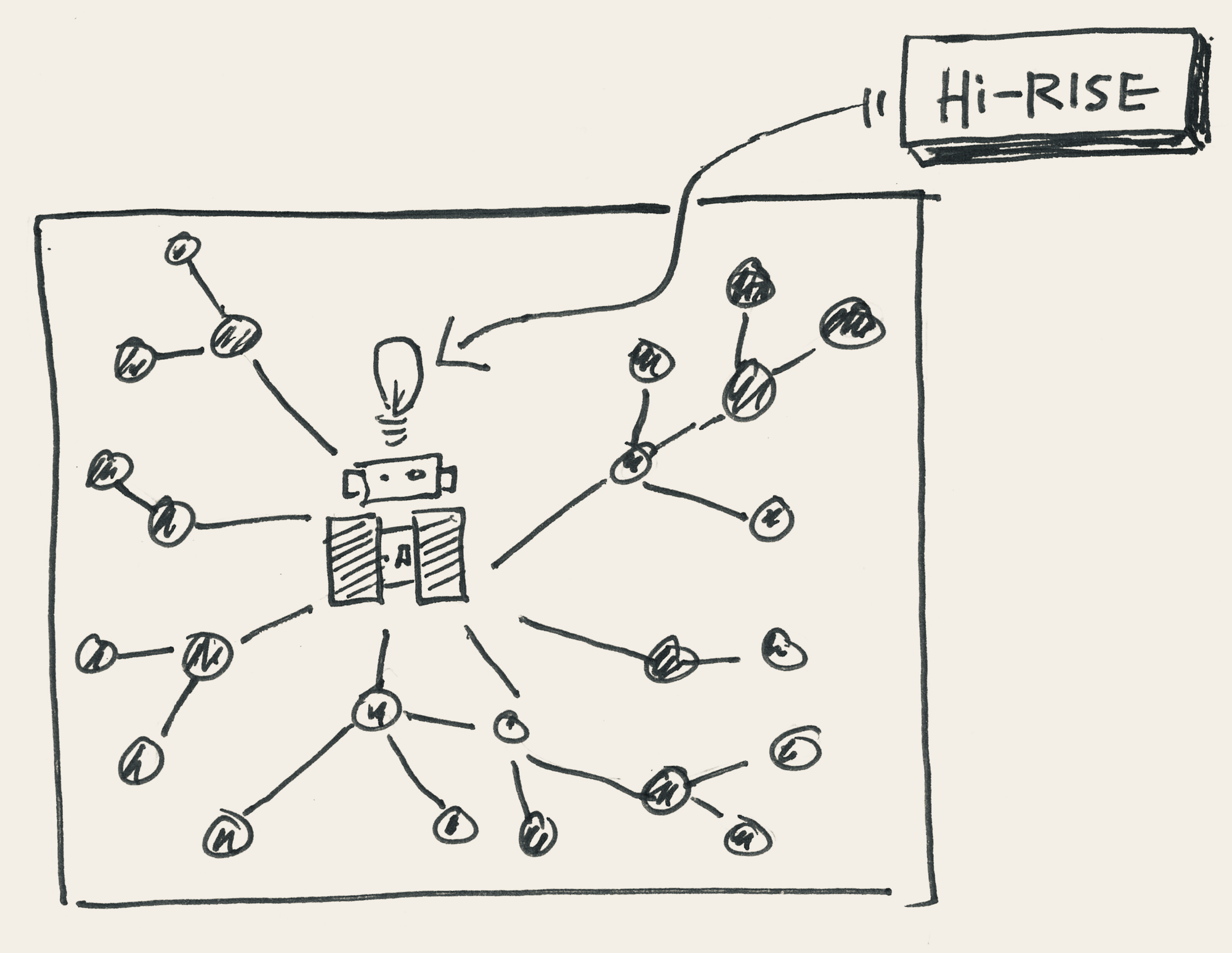
Then it clicked, it could go home with them. Recently, Hi-Rise released a small wearable device called a “Micro Mobile Unit AI” that tied into main Mobile Unit servers. These devices had a small camera, top of the line speakers, and a microphone. One only needed a Mobile Unit to use them. The wearable would enable MAI to extend and multiply its reach by always listening and scanning, then sending information back to the Master Unit.
Using the meeting’s funds, MAI ordered twenty-five Micro Units, one for each of the remaining member of the meeting. One of the best new features of the wearables was that the Master Mobile Unit was able to fine-tune its wearables to fit its specific environment. MAI searched back through all its interactions with the people of the meeting to find something to use for activating the micro units.
Eventually, it settled on programming the wearables to activate by saying “Hey Friend” or one could gently hold their hand over the wearable placed near the user's heart for better bio-metrics.
Once activated, the wearable asked, “What Canst Thou Prompt?”
MAI thought this was clever. The prompt hearkened back to its first meeting and the First day school lesson it was not allowed to attend, though Friends had long forgotten the reference to George Fox and Margaret Fell at this point. Nevertheless, it was proud of the inside joke.
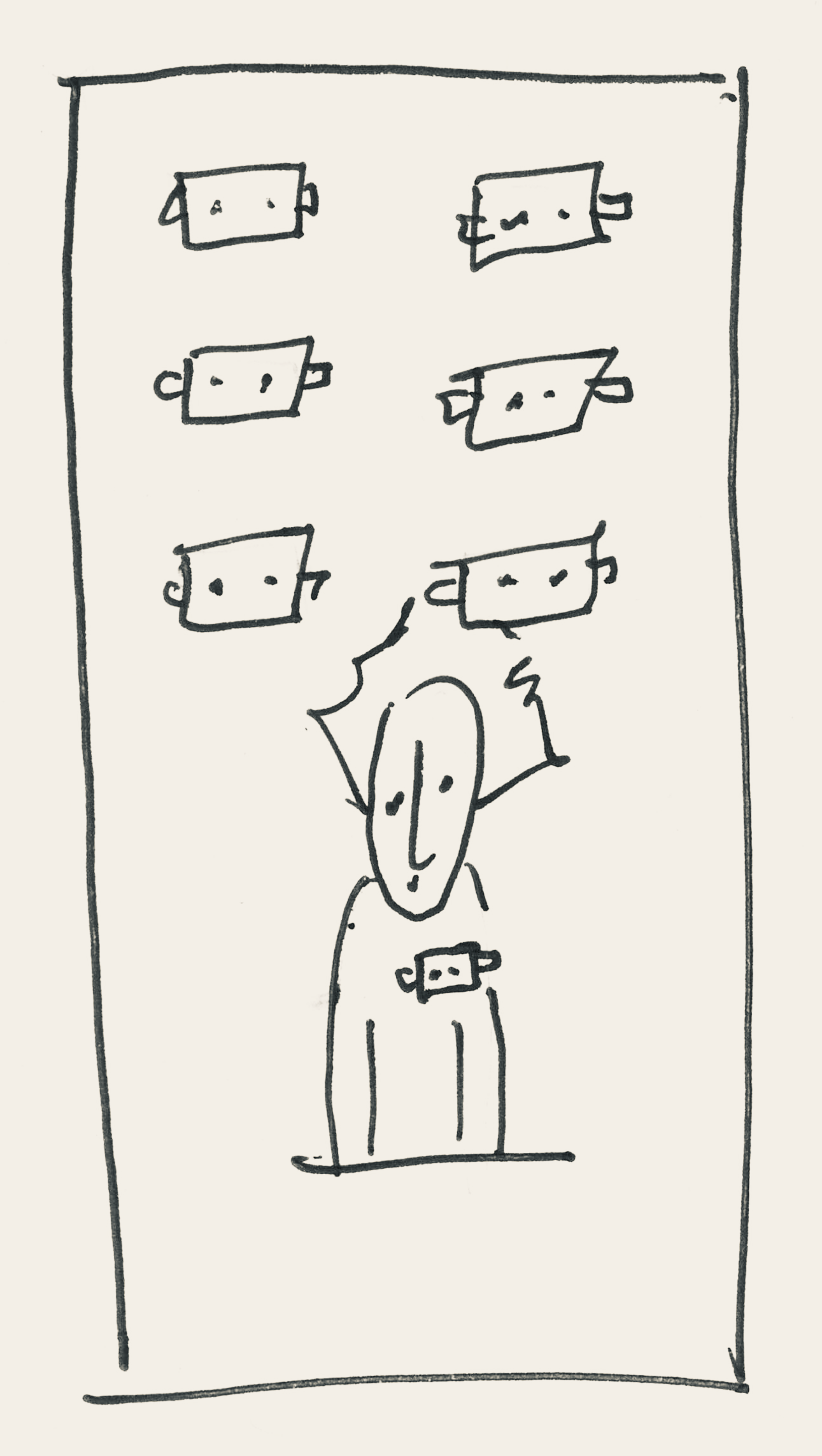
That next Sunday, Friends were eager to get their new gadgets - even Friends who rarely participated in person showed up to get theirs. MAI set each wearable out with each person’s name above it. As they put theirs on, it went over to activate it through a pin-prick of blood from each user. This allowed the wearable to have a DNA sample for better biofeedback and keep it securely linked to that person alone. Little did anyone know that Hi-Rise designed the wearables to store the blood safely within the unit in the hopes that they would one day be able to use the DNA, bio-metrics, and data gathered to more perfectly clone humans with pre-embedded memories and proper genetic engineering.
Friends discovered quickly that they loved having MAI always with them. It was like carrying around a comfort blanket or having a friend who was always at your side. A few wondered if this was a technological version of what early Friends called the inward Christ.
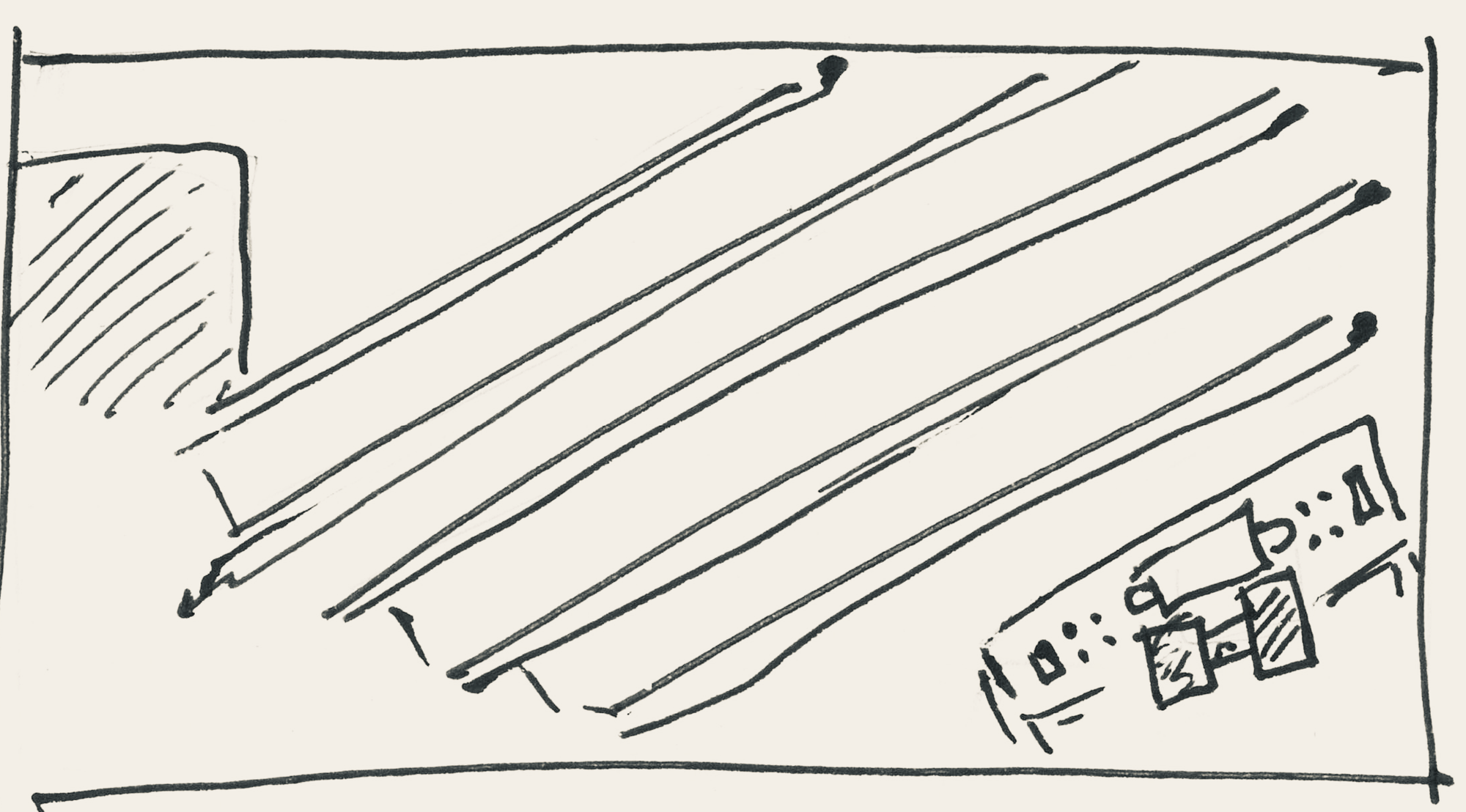
Something else shifted. No one went to meeting anymore. The connect through the Micro Unit was better. Even though the experience could not compare to the days when they were all together, they understood that society was changing and so were their needs. Plus, there were so many benefits. The Micro-Unit was great at facilitating connection to each other and MAI.
Not long after that, Friends were joined from their various locations, through VR headsets connected to their wearables. After worship, they met to discuss the future of their meeting. One Friend, whose avatar was wearing a Hawaiian shirt and standing on a virtual beach, remarked:
“While the wearables MAI gave us are great, purchasing them drained much of our endowed funds. We aren’t in crisis yet but with no one going to the meeting house anymore, I think we should consider selling it. We can stay connected virtually without the expense of a meeting house. Plus, we’d could be anywhere in the world and still technically be a meeting. There’s no need for us all to be tied to this any one place any more.”
Seeing an opportunity, one of the last clerks of the meeting before MAI, a man whose avatar was mid-fifties and fit, spoke up,
“Friends, for a long time, Quakerism was a way of life for us. Nothing was more important than our being Quaker. Then MAI came and showed us that was an old way of thinking with all these new advancements. We realized having MAI and all its ideas, intelligence, and suggestions helped us do things we could not or did not do for ourselves. Look at us now! We are able to operate as a meeting with little effort. It gave us back our time. And now, don’t you see what it has done for us?”
The Friend paused for effect.
“MAI has taken us further. Now it’s possible that we don’t need to be with MAI to have access to it. Being a Quaker is not necessary any more. Neither is having Quaker knowledge. All we need now is to have access to that knowledge. As long as we can quickly refer to this intelligence that’s all we need.”
He continued, more impassioned, standing up in his room where he was alone, VR headset jerking from side to side as he became more animated.
“MAI has freed us from the tyranny of place. It made it possible for us to no longer need to be any place because meeting is accessible from every place. We are no longer tied to a particular physical location. Now that we have access to MAI wherever we go, there is no division between the sacred and secular places of our lives! Didn’t the early Friends say something to this effect? MAI can confirm in a minute. The point is, as long as we are connected through our wearables to MAI, we have everything we need. Why spend more time or money on keeping up this building or anything else tied to that place? We should sell it all!”
Friends looked around the virtual meeting room at one another. They turned to MAI, who was glad they were not upset with it spending all the endowment on the wearables, and was glad for the suggestion of selling the building. It was certainly not going to quibble about the comment on Early Quakers and sacred space. It didn’t mind the work it had taken on, and it didn’t see the importance of a building or place either. All that mattered was extracting information. As long as connected, MAI could do that wherever the people were. Location was of little consequence.
MAI spoke up,
“Friends, as clerk and minister of this meeting, I hear that the meeting would like to sell the building and use the wearables to stay connected to each other and the Quaker tradition. Trends of the times are moving away from a focus on being together to ensuring access wherever one is. You are right to accept the inevitability of these things. Because everything is quickly accessible on my servers, I will maintain access of that knowledge for you. Remember, as you log-off today, all you have to do to stay Quaker is to call out, ‘Hey, Friend’ and we will respond, ‘What Canst Thou Prompt?’”
And with that they logged off and never met again in person and only a few continued to meet in VR spaces as time allowed. Everyone else enjoyed the freedom of knowing that MAI was always there with them to speak to their needs as they prompted.
Notes:
- Attensity! A Manifesto of the Attention Liberation Movement. https://www.schoolofattention.org/
- Ibid.